Tell them early, and tell them the truth
The instinct is to wait until the plans are settled so you can give a child the full picture at once. In practice that is backwards. What unsettles children is not the move, it is finding out late that a decision was made without them.
Say it as soon as it is real. Let them ask the difficult questions — will I change school, will I see my friends, do I get my own room — and answer the ones you can honestly answer. "I don't know yet, but I'll tell you as soon as I do" is a perfectly good answer, and it is much better than a reassurance that turns out not to be true.
Expect the reaction not to arrive immediately. It is common for a child to seem fine for a fortnight and then be upset about something apparently unrelated.
Give them a job that fits their age
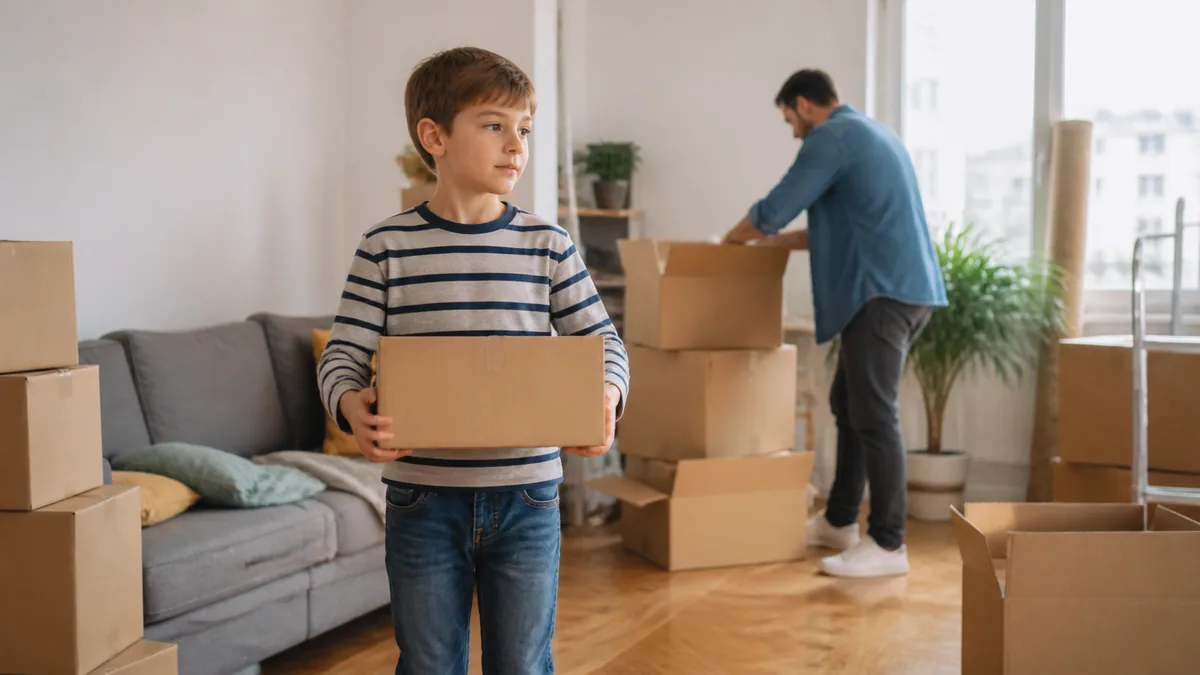
A bored child during a move is a child underfoot. More to the point, packing is one of the very few parts of this a child has any control over, and control is what they are short of.
- Preschool. Let them choose the stickers for their boxes, or give them one small box of toys that is theirs and that they carry themselves.
- School age. They can pack their own room with you checking. It takes longer than doing it yourself, and it is worth it.
- Teenagers. What matters most is knowing the schedule — when exactly the old room gets dismantled, where they sleep the first night, when they can have friends over at the new place. A concrete timetable calms a teenager far more than being told it will all be fine.

Older children often want a goodbye party with their friends before the move. It is a small thing to arrange and it gives the whole process an ending rather than just a disappearance.
Planning a move?
Tell us what needs moving and we will give you a firm price.
The overnight bag that never goes in the van
Whatever else you do, pack one bag per child that travels in the car with you, not in the van with everything else.
Inside: pyjamas, toothbrush, the favourite toy or blanket, a change of clothes for the next day, and for younger children the night light they already know. The goal is that the first evening in the new flat looks as much like the last evening in the old one as you can manage — without having to open ten boxes at eleven at night looking for pyjamas.
Where the children are on the day
Loading is loud and chaotic even when the crew is working tidily — doors stay open, furniture goes through the hallway, and occasionally something gets put down harder than anyone intended. It is not a good environment for a small child, and a small child is not a good environment for people carrying a wardrobe.
For younger children the best arrangement is to spend the loading at a relative's or a neighbour's and arrive at the new address once the space is safe to play in. If that is not possible, pick one room to be packed last, and let them be in there with their toys while everything else happens around them.
The first week
Do not try to unpack the whole flat while a child watches the place fill with cardboard. Unpack the children's room first, and the bathroom, and leave the rest.
A child needs their own corner looking like theirs as early as possible — the familiar bed, the familiar toys in roughly the familiar arrangement. It settles them faster than any amount of talking about it, even if the living room is still stacked with boxes for another week.
Keep the old sleeping and mealtimes as closely as you can for the first few days. A new address is enough change for one week; everything else can go back to normal gradually.
We label boxes of children’s things separately as a matter of course, so that room can be unpacked first — just tell the crew which ones they are when they arrive.
Frequently asked questions
How do I prepare a child for a move?
Tell them as soon as the decision is real rather than waiting for the full picture, and answer the hard questions honestly — including “I don’t know yet”. Then give them a job: packing their own room, or choosing what goes in their own box. The involvement matters more than the packing.
What should I keep out of the van for the children?
One bag per child, travelling in the car with you: pyjamas, toothbrush, the favourite toy or blanket, clothes for the next day, and the familiar night light for younger ones. Pack it together with them so they can see their things are not disappearing.
Should children be there during the loading?
Preferably not, for younger ones — loading is noisy and there are people carrying heavy furniture through the doorways. A relative or neighbour for those few hours is ideal. If that is not an option, keep one room packed last and let them stay in it with their toys.
What should I unpack first in the new home?
The children’s room and the bathroom, before anything else. A child who has their own corner looking like theirs settles much faster, even with the rest of the flat still full of boxes. Keep the old bedtimes and mealtimes for the first few days as well.
My teenager is angry about the move. What helps?
Specifics, not reassurance. When the old room is packed, where they sleep the first night, how they get to school, when friends can visit. Teenagers object to losing control over their own arrangements more than to the address changing — a concrete timetable gives some of that back.

Marko Mišulić
KOMBI-KOMBI has been running since 2013, and in that time several thousand homes and businesses have gone through our vans in Belgrade, across Serbia and around Europe. Everything on this blog comes from what our crews actually meet on the job.