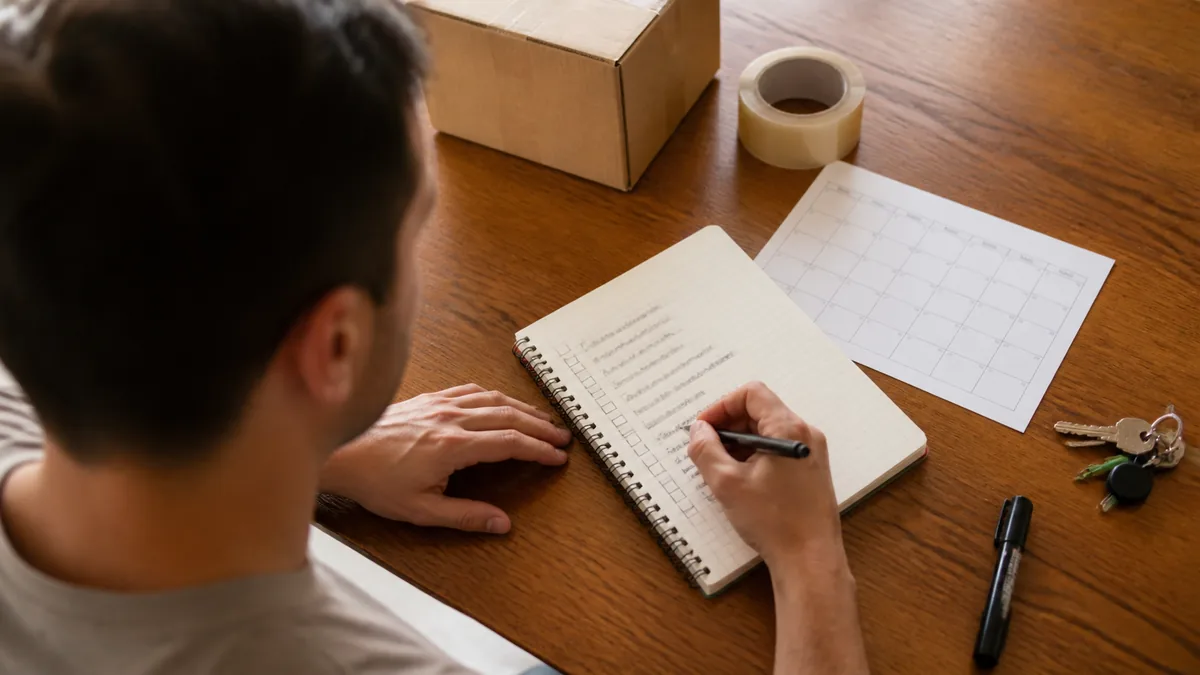
Why a written list beats keeping it in your head
A move is not one big job. It is about sixty small ones, spread over two months, and most of them have to happen in a particular order — you cannot confirm the van before you know the volume, and you cannot know the volume before you have decided what you are not taking.
What we see from the inside is simple enough. The customers who arrive with a written list have shorter, cheaper moves, and far fewer of those moments on the day when something turns out not to have been arranged. The ones working from memory are the ones calling the internet provider while the crew is already carrying boxes down the stairs.
Eight weeks out: decisions, not boxes
Two months ahead is early enough that nothing is urgent, which is exactly why it is the right time to start. At this stage you are not packing anything. You are making the three decisions everything else depends on.
Book the moving company
Get this out of the way first, because the good dates go first. Weekends and the first and last few days of the month are the busiest — if you want one of those, six to eight weeks ahead is not too early.
When you compare companies, ask for a written quote rather than a figure over the phone, check that the company is actually registered, ask what the insurance covers, and read the Google reviews. We are happy to be checked the same way: KOMBI-KOMBI holds a 5.0 rating, and the survey that produces the quote is free. Call 066/50-40-30-9 and we will come and look at what there is to move.
Walk through the flat and write down what you own
Room by room, write down what is there. This does two jobs at once: it tells the company roughly what size of van and crew you need, and it forces the second question — do you actually want to pay to move all of it? The usual rule of thumb is that anything you have not touched in a year is a candidate for selling, giving away or recycling.
Set a budget, then add a fifth
The company's fee is the part people plan for. The parts they do not are the packing materials, cleaning both places, the small repairs the old landlord wants done, and the deposits and fees at the new address. Work out the real number and add fifteen to twenty per cent on top — in our experience, that is roughly what the forgotten items come to.
Four weeks out: start packing, start the paperwork
A month ahead is where the move stops being an idea. Two things run in parallel from here: boxes, and the administration.
Pack the rooms you barely use
Begin where nothing will be missed — storage rooms, the cellar, the loft, the spare bedroom. Label every box on the side with what is inside and which room it belongs in at the new address. It takes ten seconds per box and saves hours at the other end, because the crew can put each box in the right room instead of stacking everything in the hall.
Wrap breakables in bubble wrap, paper or towels as you go. If you have antiques or framed art, consider having them packed professionally — our full-service move includes packing everything for you, and the things that are hardest to replace are the ones worth not doing yourself.

Tell everyone your address is changing
The list is longer than it looks: your bank, your insurer, your doctor's surgery, your children's school or nursery, your employer, and every subscription that still arrives on paper. Have the post office forward your mail. The order to do it in, and the deadlines that go with it, are set out in our guide to moving abroad step by step if you are leaving the country.
Sort out the utilities
Contact the electricity provider (EPS), the communal billing service (Infostan, if you are in Belgrade) and your internet provider to arrange the disconnection at the old address and the connection at the new one. Internet is the one to start early — installation can take up to two weeks, and nobody enjoys their first fortnight in a new flat on mobile data.
If either building has a lift, tell the building manager the date in advance so it can be reserved and the crew is not carrying a wardrobe up six flights.
Planning a move?
Tell us what needs moving and we will give you a firm price.
Two weeks out: pack everything except what you are living on
Now the real packing happens. By the end of this fortnight, everything should be in boxes except the small amount you need to get through the next few days.
Down to the minimum
Clothes go (keep out what you will wear), along with books, decorations, small appliances and most of the kitchen. What stays out: one set of bedding, basic cutlery and plates, a few changes of clothes, and your toiletries. That is genuinely enough.
Take the big furniture apart
Large wardrobes, beds and bookcases usually have to come apart before they travel — they load faster and they are far less likely to be damaged. If you would rather not do it, we offer furniture assembly and dismantling as part of the move.
Whoever does it, put the screws and fittings in a labelled bag and tape the bag to the piece of furniture they came from. Loose screws in a drawer somewhere is how a reassembly turns into an evening.

Confirm the details with the company
Ring and confirm the date, the arrival time, how many people are coming and what vehicle. Tell them now about anything unusual: a piano, a safe, a large aquarium, big plants, anything that needs two extra pairs of hands. The more they know beforehand, the less of the day is spent improvising.
One week out: logistics, not boxes
By now most of the packing is behind you. The last week is about the things that only work if they are arranged in advance.
Clean the new place while it is still empty
If you have access, go and clean it before anything arrives. An empty flat takes a fraction of the time, and the kitchen and bathroom are much easier to do properly before the boxes are in the way.
Sort the parking at both addresses
There has to be somewhere for the van to stand close to both doors. In central Belgrade this is the single most common thing that goes wrong on the day, and it is entirely avoidable — tell the neighbours, reserve the space, and if the street is narrow, tell us so we can send the right vehicle.
Have food and water ready
It is a long, physical day. Water, juice and something light to eat, for you and for the crew. It is a small thing, and it makes the whole day go better.
Also start running down the fridge and freezer this week. Whatever is left on the morning of the move gets thrown away.
Moving day
If the previous six weeks went to plan, today is not about decisions. It is about executing them.
The morning
Get up early and finish the last few things: strip the beds, pack the remaining toiletries, empty and wipe out the fridge. Check that every wardrobe door is shut and every box is closed and labelled.
When the crew arrives
Spend five minutes walking them through it — what goes first, what needs care, what is not going at all. Then stay around while they load, so there is someone to ask. The loading of an average two-bedroom flat takes two to four hours; unloading takes two to three.

Before you close the door for the last time
Walk through every room, including the storage room, the cellar and the balcony. Open every cupboard and every drawer — this is where things get left. Read the electricity and water meters, write the numbers down, and hand over the keys.
After the move: the first week
You are in. A few things are worth doing while the boxes are still stacked.
Unpack in order, not all at once
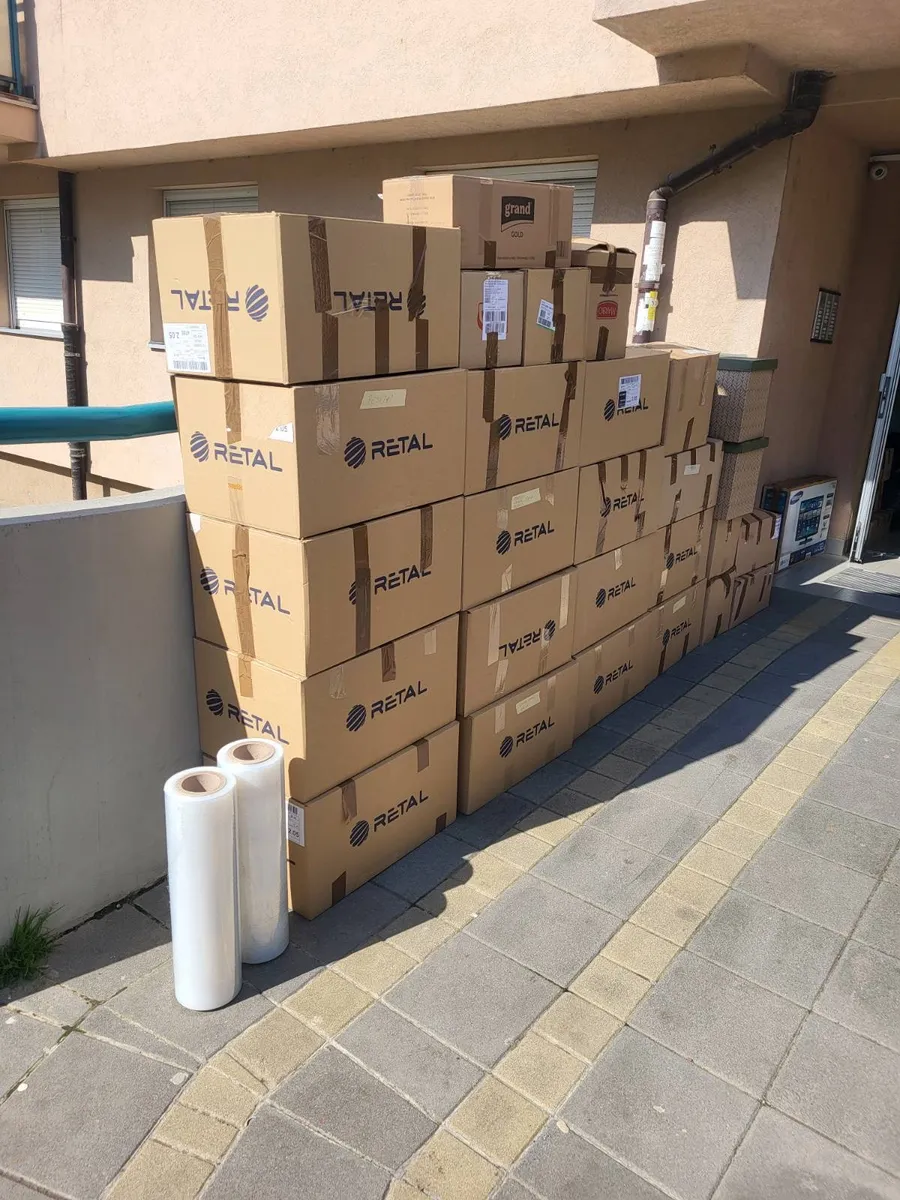
Bathroom and kitchen first — those are the rooms you need on the first evening. Then the bedrooms, then the living room, then everything else. Break down each box as you empty it and get the cardboard out of the way, or the flat stays a maze for a fortnight.
Check that everything works
Electricity, water, heating, internet. If something is not working, report it the same day rather than at the weekend. Register as the new user with the electricity provider and with Infostan, and if you have changed your registered address, remember the ID card at the police station.
Say hello to the neighbours
In the first few days, introduce yourself. It costs nothing, and in a building where you will be sharing a lift, a staircase and occasionally a water leak, it is worth more than it sounds.
The printable checklist
Everything above, as a list. Print it, tick it off, and you will not need to hold any of it in your head.
Eight weeks before
☐ Research and choose a moving company
☐ Book the date
☐ Write an inventory of everything in the flat
☐ Set a budget, plus 15–20% contingency
☐ Start collecting boxes and packing materials
☐ Decide what you are selling, donating or throwing out
☐ Give notice to the landlord (if you rent)
Four weeks before
☐ Start packing the rooms you rarely use
☐ Label every box (contents + room at the new address)
☐ Change your address with the bank
☐ Change your address with your doctor and insurer
☐ Arrange mail forwarding at the post office
☐ Book the electricity disconnection and connection (EPS)
☐ Book the internet disconnection and installation
☐ Tell the school or nursery
☐ Tell your employer
Two weeks before
☐ Pack everything except daily essentials
☐ Dismantle the large furniture
☐ Bag and label all screws and fittings, taped to the furniture
☐ Confirm date, time, crew and vehicle with the company
☐ Pack the FIRST DAY box
☐ Finish selling and donating what is not going
☐ Buy cleaning materials for both addresses
One week before
☐ Clean the new place while it is empty
☐ Arrange parking for the van at both addresses
☐ Tell the building manager and reserve the lift
☐ Prepare food and water for the day
☐ Run down the fridge and freezer
☐ Pack the remaining clothes
Moving day
☐ Get up early and finish the last packing
☐ Strip the beds, pack the toiletries, empty the fridge
☐ Check every cupboard, drawer and balcony
☐ Brief the crew when they arrive
☐ Stay present during loading
☐ Walk through every room one final time
☐ Read and photograph the meters
☐ Hand over the keys
☐ Direct the unloading at the new address
☐ Check the condition of everything before signing
The first week after
☐ Unpack the bathroom and kitchen
☐ Make up the beds
☐ Check electricity, water and heating
☐ Register with Infostan for the new flat
☐ Register as a new customer with EPS
☐ Check the internet connection
☐ Introduce yourself to the neighbours
☐ Unpack the remaining boxes
☐ Recycle the cardboard
☐ Update the address on your ID card
Frequently asked questions
How far in advance should I start preparing for a move?
Eight weeks is the comfortable answer. That leaves room to book a company for the date you actually want, pack without rushing, and get the address changes done before they become urgent. If you are moving out of a house rather than a flat, or you have a lot to move, start earlier.
What should a moving checklist actually cover?
Four separate things, which is why people forget one of them: the organisation (booking the company, buying materials), the administration (address changes, mail forwarding, utilities), the packing itself room by room, and the week after you move in — unpacking, registering with the utilities and updating your ID.
How do I tell a reliable moving company from an unreliable one?
Check that the company is registered and has a tax number, read the Google reviews, insist on a written quote with the prices itemised, ask exactly what the insurance covers, and ask for references. A company that will not come and look at the job before quoting is guessing, and the guess is usually revised upwards on the day.
What do I need to do on moving day itself?
Get up early, keep your first-day bag separate, brief the crew when they arrive and stay available while they load. Before you leave, check every room including the balcony and cellar, read and photograph the meters, lock up and hand over the keys. Keep water and food within reach — it is a longer day than people expect.
Is it worth paying someone to pack for me?
For clothes, books and bedding, no — that is the part you can do yourself and save real money on. For glass, porcelain, electronics and framed art, usually yes: items packed by the owner are a standard exclusion in most insurance policies, so if something breaks, the burden of proof is on you.

Marko Mišulić
KOMBI-KOMBI has been running since 2013, and in that time several thousand homes and businesses have gone through our vans in Belgrade, across Serbia and around Europe. Everything on this blog comes from what our crews actually meet on the job.