
Why spring, and not some other time
Every year, as soon as the weather turns and the days get longer, the enquiries start. Our own figures bear it out: between March and June we take roughly twice as many international enquiries as in the rest of the year.
The reasons are practical rather than sentimental:
- Driving conditions. Dry roads, longer days, and no risk of being stopped by snow on an Alpine pass.
- The school year. Families with children aim to be settled before term starts in September.
- Hiring cycles. A lot of EU employers close contracts for the summer, so job offers land in spring.
- Finding somewhere to live. It is far easier to view flats before the summer rental season.
- And the obvious one. New season, new start — spring simply prompts people to act.
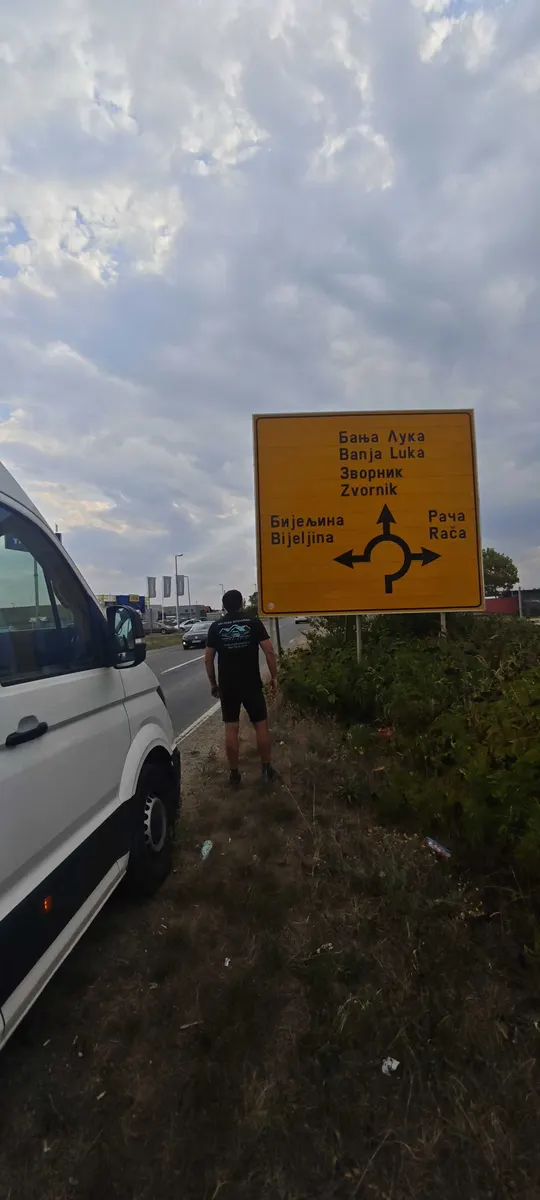
Montenegro — the first choice for life by the sea
Montenegro has been the single most popular destination from Serbia for years. Proximity, a shared language, the climate and property prices that are still within reach make it the obvious first move for a lot of people.
Where people actually go
- Budva — the centre of the tourist economy, popular with younger people and with anyone working in hospitality or IT.
- Herceg Novi — quieter, Mediterranean, and the one families with children tend to choose.
- Tivat — modern and expanding around Porto Montenegro, which draws people from the creative industries.
- Bar and Ulcinj — the more affordable south, for coastal life without coastal prices.
- Čanj — a quiet stretch between Budva and Bar that has been attracting more people looking for somewhere calm with a good beach.
In Čanj there is the Maestral Čanj complex — sea-view apartments that have become a common address for people moving to the Montenegrin coast, or looking for summer accommodation while they search for something permanent. A fair number of our customers moving to Montenegro use that kind of place as a first base while they look for a flat or a house for the longer term.
What to know before you go
- For a stay of up to 30 days an ID card is enough.
- For longer, you need to register your residence and obtain a temporary residence permit.
- Registering a company in Montenegro is relatively quick and simple.
- The cost of living is somewhat lower than Belgrade — except in Budva over the summer.
- The drive from Belgrade to the coast takes six to eight hours depending on where you are going.
Routes and prices: Belgrade – Budva, from €540 for Montenegro.
Austria — close, and stable
Austria, and Vienna in particular, has been near the top of the list for years for people who want better pay and a different quality of life without being far from home. Vienna is about 600 km from Belgrade, which means the move can be done in a single day.
Why people choose it
- Pay. Average net salary in Vienna is around €2,500 — a multiple of what the same work pays in Serbia.
- The community. An estimated 300,000 Serbs live in Vienna, so it is possible to find your feet before your German is good.
- Quality of life. Vienna has repeatedly been ranked the most liveable city in Europe.
- Education. Free schooling and strong universities.
- Distance. Six hours by road or an hour and a half in the air — close enough for weekends at home.
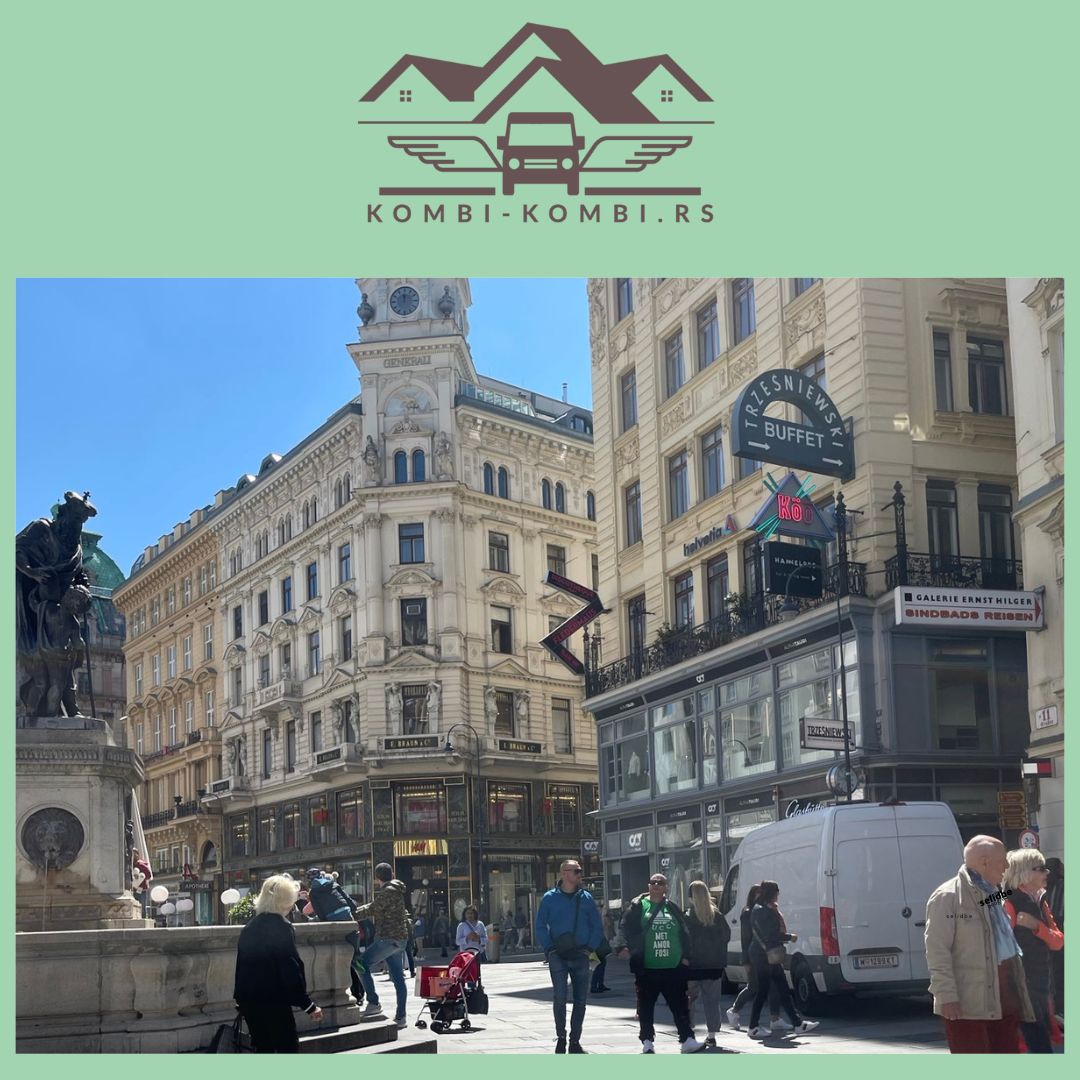
Where people live
Serbs in Vienna most often live in the 10th, 11th, 16th and 23rd districts, where rents are more affordable. Graz is popular too — smaller, quieter and cheaper to live in.
Austria starts at €720 — see Belgrade – Vienna and Belgrade – Graz. Remember the registration deadline: three days from arrival, explained in the Meldezettel.
Planning a move?
Tell us what needs moving and we will give you a firm price.
Germany — work and prospects
Germany remains the first choice for people moving for a career rather than a change of scene. Berlin, Munich, Frankfurt and Hamburg are where our customers most often go.
The sectors that hire
- IT and software — particularly Berlin and Munich, where Serbian developers have a good reputation.
- Healthcare — nurses and doctors are in demand, subject to having the qualification recognised.
- Construction and the trades — Serbian tradespeople are valued for the standard of the work.
- Hospitality — seasonal and permanent, especially in Bavaria.
What it costs
A move from Belgrade to Germany usually runs between €1,000 and €3,000 depending on how much there is and exactly where it is going. Berlin is about 1,400 km, Munich about 1,000. Germany starts at €1,260.
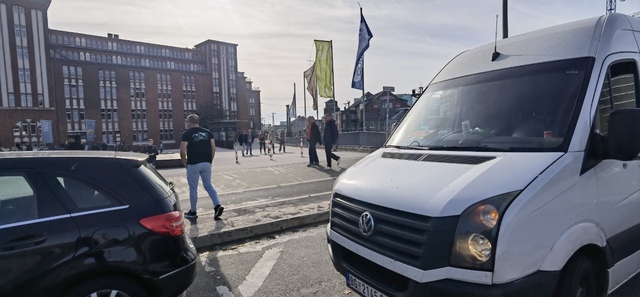
How long the whole thing takes door to door is set out in how long a move to Germany takes, and the two-week registration deadline in the Anmeldung.
Slovenia and Croatia — staying in the region
Slovenia
Ljubljana is compact, safe and modern, Slovenia has one of the lowest unemployment rates in the EU, and the Serbian community there is well established. It suits IT people and anyone setting up their own business. From €520.
Croatia
Zagreb is the most common destination, but more people are moving to the coast — Split, Rijeka, Zadar. The language is close and it gives access to the EU market. Since joining Schengen and adopting the euro in 2023, Croatia has become more attractive again. From €470.
Note that both are EU members, so Serbian citizens still need a work permit — the fact that the border is short does not make the paperwork short.
Switzerland — for those aiming high
Switzerland is the ambition for a lot of people, and it is the one that needs the most preparation. Salaries are the highest in Europe and so is the cost of living. Zurich and Geneva are the usual destinations.
A move to Switzerland requires a work permit, and that process can take months. We recommend starting at least three to four months ahead, particularly for the customs paperwork on personal belongings — Switzerland is outside the EU customs union, so the procedure is its own thing rather than a variation on the EU one. From €1,600.
How to prepare, whatever the destination
Two to three months before
- Make a detailed inventory of everything that is going
- Decide what you are leaving, giving away or selling
- Get the documents in order — passport, visas, work permits
- Get a quote from a moving company
- Book the date — in the spring season the slots fill quickly
Two to four weeks before
- Start packing room by room, beginning with what you use least
- Notify the bank, the post office and your insurer of the address change
- Get the packing materials in — boxes, film, tape
- Pack a first box with what you need for the first few days at the new address
The day before, and the day itself
- Confirm the booking with the company
- Set aside the documents that travel with you, not in the truck
- Photograph the condition of the flat before you leave
- Walk through every room to check nothing is left
The full week-by-week version is in the complete moving checklist, and the international specifics in moving abroad step by step.
The paperwork, by destination
| Destination | Documents | Note |
|---|---|---|
| Montenegro | ID card, consignment note | Up to 30 days with no further formalities |
| Austria | Passport, work permit, inventory list, customs declaration | Registration within 3 days of arrival |
| Germany | Passport, work permit, Anmeldung, inventory | Residence registration (Anmeldung) is compulsory |
| Slovenia | Passport, residence permit, residence registration | EU member — Serbian citizens need a work permit |
| Switzerland | Passport, work permit (L/B/C), customs documents | The most involved procedure — start 3+ months ahead |
For every international move we prepare the consignment note and the customs documentation with you. What customs actually asks for is set out in customs when moving to the EU, and what cannot travel at all in what cannot cross the border. Call 066/50-40-30-9 — the advice costs nothing.
Frequently asked questions
What does an international move from Serbia cost?
It depends on the destination and how much there is. As a guide: Montenegro from €540, Austria from €720, Germany from €1,260, Switzerland from €1,600. The survey that produces an exact figure is free.
What documents do I need for an international move?
For the EU: passport, a work or residence permit, a detailed inventory of your belongings and a customs declaration. For Montenegro an ID card is enough to cross the border, but the goods still need a consignment note.
Why is spring the busiest season for moving abroad?
Stable weather and clear roads, plus the fact that many people start new jobs or a school year abroad in September — which leaves the summer for settling in. Our own enquiries roughly double between March and June.
How long does an international move take?
Transport to Montenegro is one day. To Austria and Slovenia one to two. To Germany and Switzerland two to three. The whole process including packing and delivery usually runs three to seven days depending on the destination.
How far ahead should I book for a spring move?
Six to eight weeks. Spring is the busiest season, and the weekend slots on the German and Austrian runs are the first to go. For Switzerland, start three to four months ahead because of the permit and customs paperwork.

Marko Mišulić
KOMBI-KOMBI has been running since 2013, and in that time several thousand homes and businesses have gone through our vans in Belgrade, across Serbia and around Europe. Everything on this blog comes from what our crews actually meet on the job.