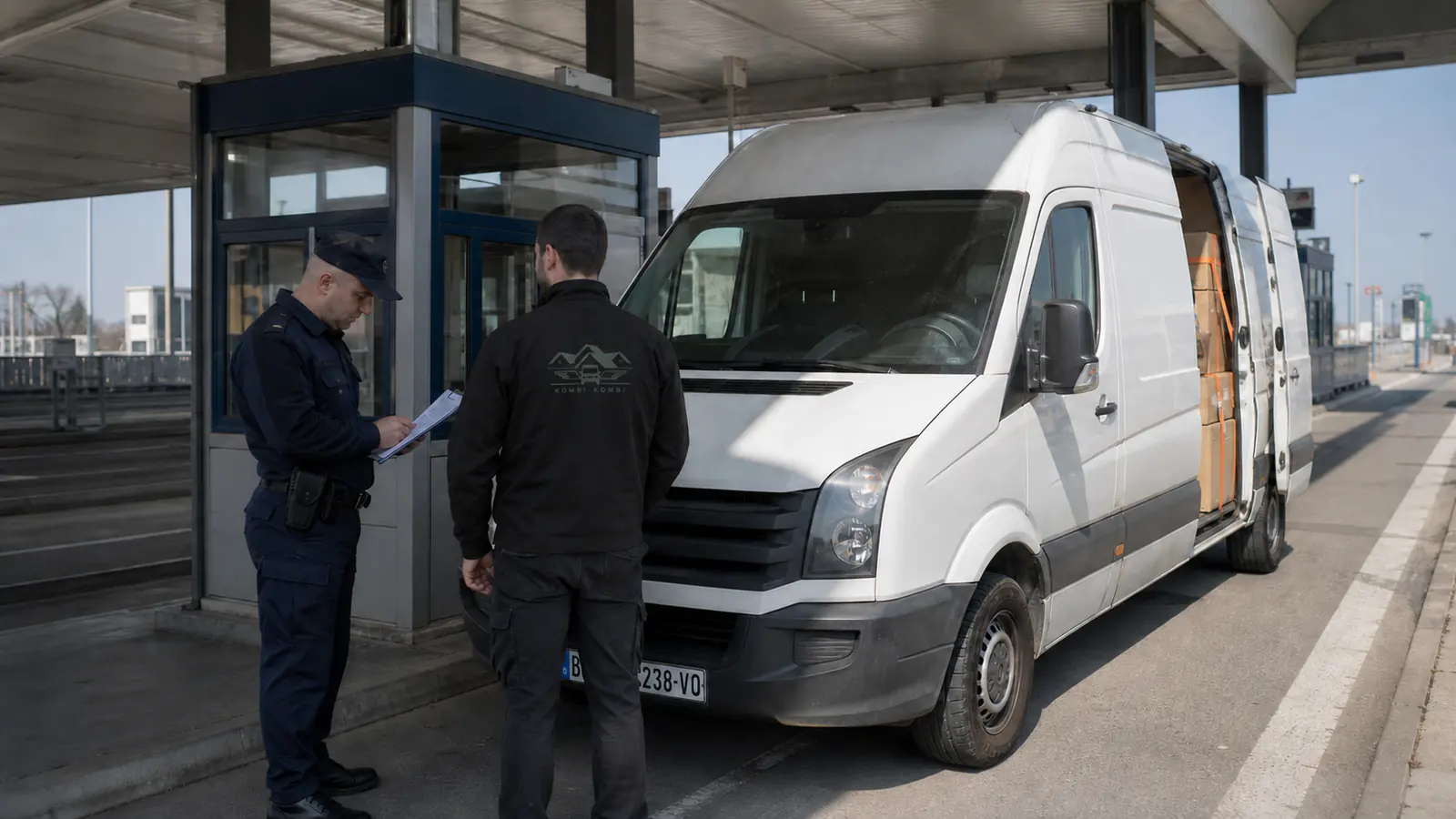
The good news: personal belongings enter the EU duty-free
When you move from Serbia to a country in the European Union, your furniture, clothes and household goods pay neither customs duty nor VAT. That is not something your mover does for you — it is a right granted by the European regulation on relief from import duties, and it is the same in every member state.
But the relief is not automatic. It depends on three conditions and one deadline, and if any of them is missed, customs is entitled to charge duty on the whole shipment. In practice people trip over the deadline far more often than over the paperwork.
What the procedure means for the price of the move itself we covered separately, in what an international move costs — clearance charges are paid separately from the transport price, because they depend on the customs valuation.
The three conditions you have to meet
For the goods to pass without duty, all three must hold:
- Residence outside the EU for at least twelve consecutive months. If you have been living in Serbia until now, this is met by itself. It becomes a problem for people who have already moved back and forth.
- The goods are yours and have been in use for at least six months before the move. New, unused furniture bought a month before the move does not qualify — it is charged as an ordinary import.
- You are genuinely moving, not sending a parcel. The relief follows a change of residence, not a consignment.
For the first and third conditions customs wants evidence: a certificate of de-registration of residence from Serbia and proof of registration in the new country, a tenancy agreement, or an employment contract.
The deadline people miss
The goods must be brought in within twelve months of the day you established residence in the new country. Not from the day you decided to move — from the day you registered.
The shipment may arrive in more than one load; there is no requirement that everything comes at once. But every load has to fall inside those twelve months.
There is also an obligation after import: for twelve months the goods must not be sold, lent, hired out or pledged. Break that and the relief falls away and the duty is charged retrospectively. This applies to you as the owner, not to the mover.
Planning a move?
Tell us what needs moving and we will give you a firm price.
What the relief does not cover
A few categories are not recognised as personal effects, however genuinely yours and used they are:
- alcoholic drinks;
- tobacco and tobacco products;
- commercial means of transport;
- articles used in a trade or profession, other than portable instruments of the applied or fine arts.
A private car can go as a personal effect, but vehicle taxes are paid on it in the destination country under local rules — that is a separate procedure and it does not travel with the household load.
The papers to have ready
For the border crossing itself you need:
- an inventory — a detailed list of the goods with estimated values, signed by you. This is the key document and it is made before loading;
- a passport or identity card;
- proof of the move — de-registration of residence and registration in the new country, a tenancy agreement or an employment contract;
- a customs declaration — in Germany, for example, a specific form is submitted to release personal effects into free circulation.
We draw up the inventory together with you, because it has to match what is actually in the vehicle. That is also why labelling the boxes matters: when an officer asks to open box 14, box 14 has to exist.
A country-by-country walk-through of the procedure is on our page about customs and paperwork.
Who does it — you or the mover
We make the declaration and deal with customs. You supply the evidence of the move and sign the inventory, because those are your own documents and your own statement of what is being carried.
In practice: tell us as soon as you have an approximate date, so the inventory is finished before packing rather than on the morning of the load. A list written in a hurry while the crew waits is the commonest reason for being held at the border.
If you are moving a smaller quantity, the same procedure applies to part loads — except that each consignment in the vehicle then has its own inventory.
Frequently asked questions
Is duty payable on furniture when moving to the EU?
No, provided you are genuinely moving and meet the conditions: residence outside the EU for at least twelve consecutive months, goods owned and used for at least six months before the move, and brought in within twelve months of registering your residence in the new country.
How long must I have owned the goods?
At least six months before the move, and they must have been in use. New furniture bought shortly before the move does not qualify and import duties are charged on it.
By when must the goods arrive to keep the relief?
Within twelve months of the day you established residence in the new country. The shipment may come in several loads, but all of them must fall within that period.
Can I sell the goods after import?
Not during the first twelve months. In that period they must not be sold, lent, hired out or pledged. If that is breached, the relief is withdrawn and the duty is charged retrospectively.
What cannot be brought as personal effects?
Alcoholic drinks, tobacco and tobacco products, commercial means of transport, and articles used in a trade or profession — other than portable instruments of the applied and fine arts.
Who prepares the customs paperwork?
The mover makes the declaration and deals with customs. You supply the evidence of the move and sign the inventory, because that is your statement of what is being carried.

Marko Mišulić
KOMBI-KOMBI has been running since 2013, and in that time several thousand homes and businesses have gone through our vans in Belgrade, across Serbia and around Europe. Everything on this blog comes from what our crews actually meet on the job.