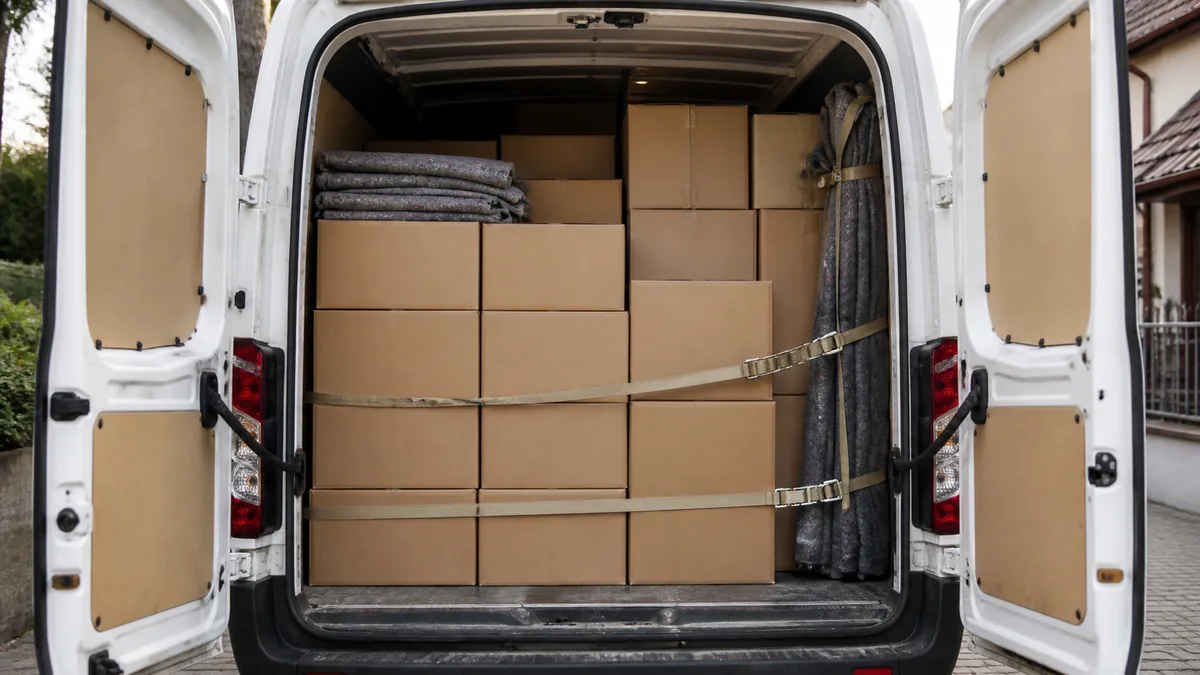
Before the first item goes in
Most damage in a move does not happen when something is dropped. It happens over an hour of driving, when two things rub against each other, or a stack shifts at the first roundabout. Almost all of it is decided before the van is moving.
So, first: handbrake on. Load space clean, dry, and lined — floor and walls covered with protective material before a single piece of furniture goes in.
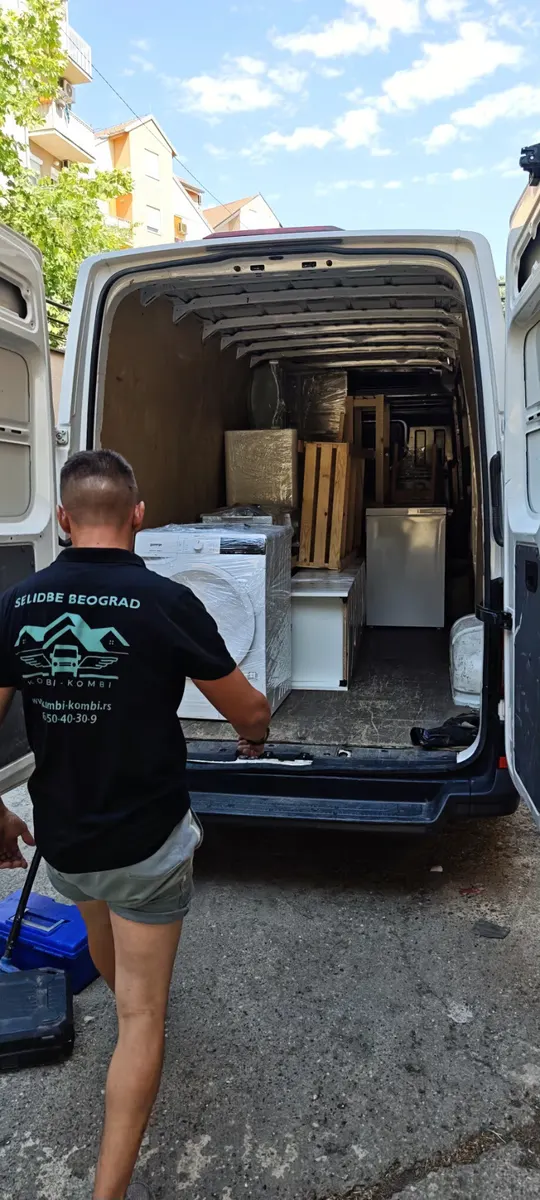
Then load in sections, securing each one before starting the next. Blankets over everything; film and padding for anything fragile. If the van is larger than the load, that is not a licence to relax — strap each piece individually to the side or rear wall, because a half-empty van gives things room to travel.
Keep the weight even, front to back and left to right. The side-to-side part matters more than people think on a longer drive, because it changes how the van handles in corners.
The order things go in
The sequence we use, which is also the order things come out at the other end — in reverse.
- Boxes first, into the front of the load space, stacked high against the bulkhead. Heaviest at the bottom, lightest and most fragile on top.
- Mattresses and bed bases, on a blanket, standing vertically.
- Sofas, also vertical, legs towards the side wall and the back of the sofa facing outwards so it protects whatever is loaded next. Cushions come off and fill gaps. Strap each sofa to the side wall.
- The rest of the furniture, padded and strapped, weight spread evenly.
- Appliances and wardrobe boxes last, nearest the doors, because they are the first things off.
And then actually close the rear and side doors properly. It sounds too obvious to write down. It is not.
Planning a move?
Tell us what needs moving and we will give you a firm price.
Items that need their own treatment
- Aquariums — emptied, wrapped, and loaded on top of everything.
- Bed frames — strapped to the rear of the load space.
- Chairs — legs wrapped individually before the chair is wrapped.
- Drawers — facing the side wall so they cannot slide open. Anything loose gets strapped.
- Metal — never next to furniture. It cuts through wrapping during the drive.
- Mirrors and glass — wrapped, slid between mattresses, strapped in place.
- Wooden furniture — wrapped thoroughly, with attention to the edges and corners. Oak and cherry mark more easily than people expect.
- Rugs — rolled and taped.
- Televisions — wrapped and strapped, always upright. A flat screen never travels on its side or on its back.
The techniques that save space
In our experience the problem is almost never that there is not enough space. It is that the space was used badly. Five things our crews do on every load:
- Fill the voids. The inside of a wardrobe, the space under a table, the inside of drawers — all of it takes smaller, lighter items. Empty space in a van is wasted space, and the things around it move during the drive.
- Stack boxes like brickwork. Overlapping, not in neat columns. A bonded block of boxes behaves as one mass and does not shift under braking; a column falls over.
- Everything flat goes vertical. Table tops, mirrors, pictures, mattresses — upright, never laid flat on top of each other. Under the weight of other things they bend or crack.
- Spread the weight across the axles, and across the width. Weight piled on one side affects the steering, particularly in bends.
- Last in, first out. Whatever you need first at the new address — the first-evening box, tools, the vacuum cleaner — goes in last, right by the doors, so you are not unpacking the whole van to find it.
Frequently asked questions
In what order should things be loaded into a van?
Heaviest and bulkiest first — appliances, wardrobes, beds — against the wall of the load space. Then boxes stacked against the bulkhead, heaviest at the bottom. Mattresses and sofas go in vertically, and appliances and wardrobe boxes last, by the doors, because they come out first.
Why do things get damaged in transit even when nothing is dropped?
Friction and movement. Most damage comes from two items rubbing against each other over an hour of driving, or a stack shifting under braking. That is why everything is blanketed, why boxes are stacked overlapping like brickwork, and why each section is strapped before the next one is loaded.
Should a television be laid flat in the van?
No. A flat screen travels upright, wrapped and strapped — never on its side or its back. The panel is not designed to carry its own weight in that position, and the damage does not always show up immediately.
What if the van is bigger than the load?
Strap each piece individually to the side or rear wall. A half-empty van is more dangerous than a full one, because everything has room to move, and loose items build up momentum before they hit something.
How can I make the loading go faster?
Have everything packed and grouped near the door before the van arrives, sorted by which room it goes to at the new address. The loading itself is quick — what takes the time is carrying things out of four different rooms while the crew and the van wait.

Marko Mišulić
KOMBI-KOMBI has been running since 2013, and in that time several thousand homes and businesses have gone through our vans in Belgrade, across Serbia and around Europe. Everything on this blog comes from what our crews actually meet on the job.