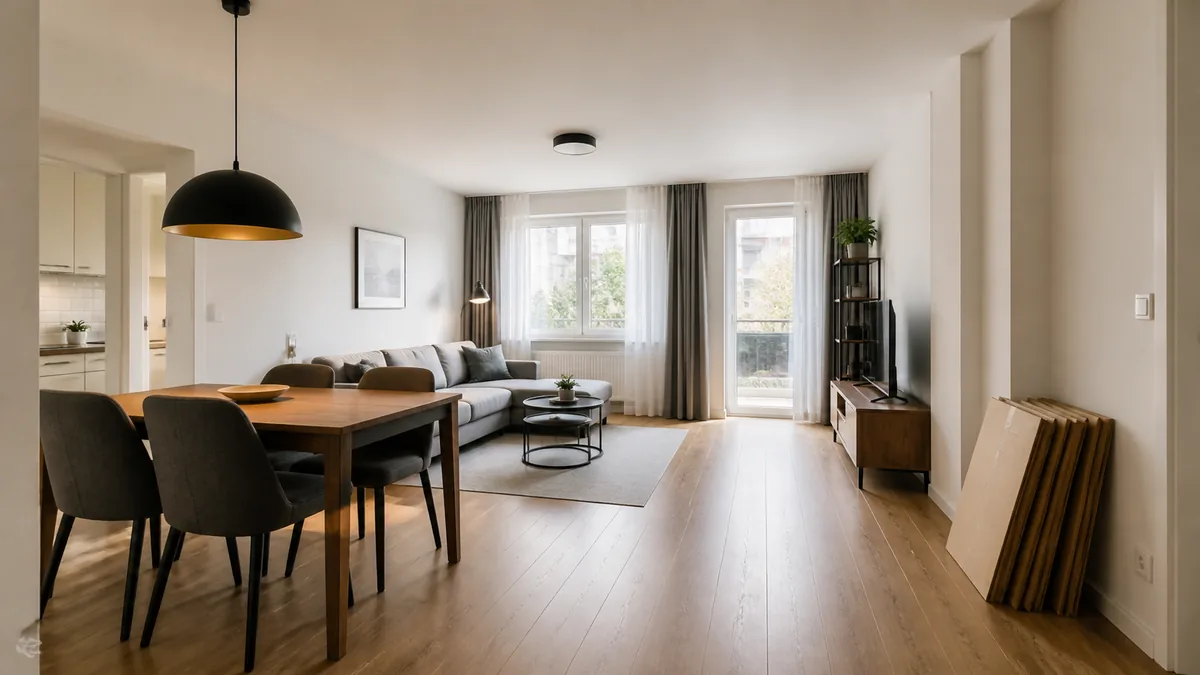
The first few days are the easiest they will ever be
There is a short window, right after the last box is emptied, when everything is in its place and the flat is as clean as it will ever be. It is also the window in which the habits that decide the next two years get set, mostly without anyone deciding anything.
That is the useful thing about a move: you are starting from zero, so a system you adopt now costs nothing to adopt. The same system introduced into an already-cluttered flat is a project.
Decide what is not coming in
The most effective thing happens before the move rather than after it. Every item you do not bring is one you never have to store, clean around or move again — and you pay to move volume, so it is money as well as space.
Go room by room and sort into three: sell, give away, dispose of. Anything untouched for a year is a candidate. If what is left over is more than fits in a car, that is an ordinary job for us — junk removal, and cellar and loft clearance for the spaces where it accumulates.
Planning a move?
Tell us what needs moving and we will give you a firm price.
Start at the front door
Most of what gets cleaned off floors is carried in on shoes. Taking them off at the door removes the problem rather than managing it, and it is the single habit with the best return.
It only works if there is somewhere to put them. Make space by the entrance on the first day — a rack, a bench, a cupboard — before the hallway establishes itself as a place where shoes are simply left.
Put the furniture where it actually works
While the flat is still empty, think about how each room will be used rather than how it looks in isolation. Where the light falls, which way doors open, where the sockets are, what will be in the way of a vacuum cleaner.
It is far easier to decide this once than to live with a wardrobe that blocks a window and then move it in a year. This is also the argument for having the assembly done by the crew on the day — while there are four people and a trolley in the flat, moving a wardrobe two metres costs nothing.

Small habits beat big efforts
Trying to go from a cluttered life to a spotless one in one weekend does not hold. One habit at a time does.
- Wash up after each meal rather than at the end of the day.
- Make the bed in the morning. Two minutes, and the bedroom reads as tidy regardless of anything else.
- Put things away when you finish with them, not when you notice the pile.
- Clean as you go — wipe the hob while the pan is cooling, rather than scheduling a kitchen day.
None of these is interesting. Together they are the difference between a flat that stays in order and one that needs a weekend every month.
The things people forget in a new flat
Two that come up often and have nothing to do with tidiness.
Air. Indoor air quality gets no attention next to dusting and vacuuming, and it matters more. Air the rooms properly every day, particularly in winter when the heating is on and the windows stay shut. Plants help, as does switching to cleaning products that are not aggressive.
Textiles. Bedding, pillowcases, curtains, rugs and carpets collect dust and allergens continuously and are the thing most often left out of a cleaning routine. Wash what can be washed on a schedule, and have the rugs and upholstery deep-cleaned once in a while.
And in the first week, check that everything in the flat actually works — electricity, water, heating, internet — and report anything that does not straight away. The rest of the administrative list is in changing your address after a move.
Frequently asked questions
What is the best time to declutter, before or after a move?
Before, and preferably before you start packing. Every item you do not bring is one you never store, clean around or move again — and since you pay to move volume, it is money as well as space.
What single habit makes the most difference?
Taking shoes off at the door. Most of what ends up on floors is carried in on them. It only works if there is somewhere to put them, so make space by the entrance on the first day.
Should I plan the furniture layout before moving in?
Yes, while the flat is still empty — where the light falls, which way doors open, where the sockets are. It is much easier to decide once than to live with a wardrobe blocking a window. Have the crew place and assemble everything on the day, while there are four people and a trolley in the flat.
What gets overlooked in a new home?
Air quality and textiles. Air the rooms every day, especially in winter with the heating on. Bedding, curtains, rugs and upholstery collect dust and allergens continuously and are the thing most often left out of a cleaning routine.
How do I avoid the clutter building up again?
Small habits rather than big efforts: wash up after each meal, make the bed in the morning, put things away when you finish with them, and wipe as you go. A system adopted while the flat is still empty costs nothing; the same system introduced later is a project.

Marko Mišulić
KOMBI-KOMBI has been running since 2013, and in that time several thousand homes and businesses have gone through our vans in Belgrade, across Serbia and around Europe. Everything on this blog comes from what our crews actually meet on the job.