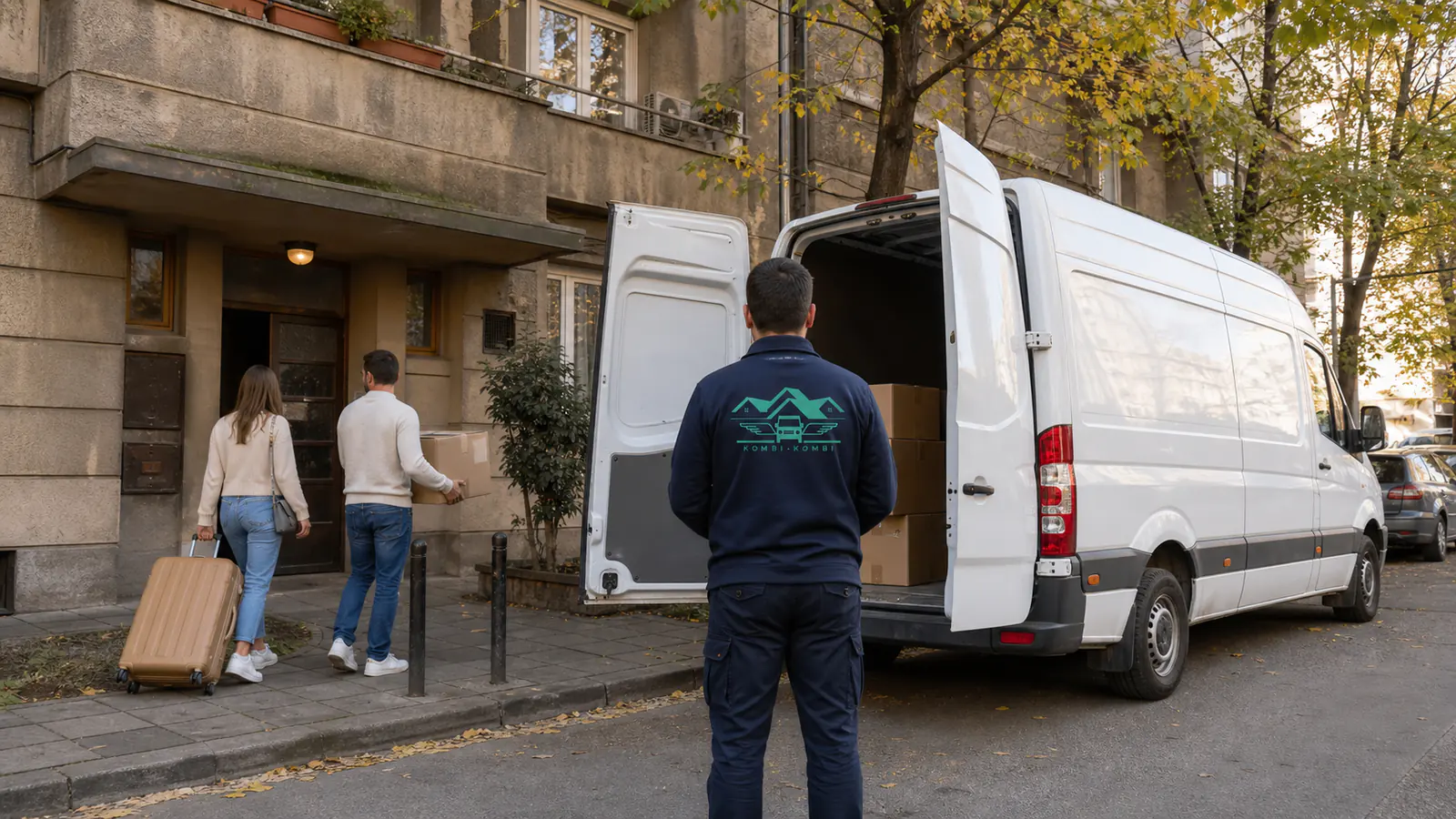
Coming home is not a move in reverse
People returning to Serbia after years of work in Germany, Austria or Switzerland usually assume the journey home is the same as the journey out, only backwards. It is not. Going out is an export of personal effects; coming back is an import — and import into Serbia has its own rules, its own deadline and a relief that many people fail to use because they do not learn about it in time.
That relief is the customs exemption for returnees from work abroad, and it can be worth thousands of euros. The conditions are clear, but they hang on a deadline that starts running on the day you return.
Who qualifies, and what it is worth
It applies to people who have worked abroad continuously for at least two years. How much the relief is worth depends on how long you were away:
| Years working abroad | Relief |
|---|---|
| under 2 years | no relief |
| 2 to 10 years | up to €20,000 of household goods |
| over 10 years | no value limit |
The relief covers household goods — furniture, appliances, clothing, tools, household effects. The things you actually used in your home out there.
The twelve-month deadline, and where it starts
The goods must be brought in within one year of the day you returned from working abroad. Not from the day you decided to come back — from the return itself.
In practice that means one thing: if you plan to come back alone first, find a flat, and only bring your things eighteen months later, the relief has expired and you will pay full import duty. If the dates do not line up, it is cheaper to have the goods arrive in time and wait in storage than to miss the deadline.
Planning a move?
Tell us what needs moving and we will give you a firm price.
A car is not included — under any circumstances
The relief expressly does not extend to motor vehicles, however long you were abroad. A car is a separate import with its own duties and its own procedure, and it does not travel with the household load.
This catches people out more than anything else on this list, usually because the relief is described to them as covering "everything you owned out there". It does not.
Papers to arrange in advance
The key document is a certificate of the length of your employment abroad, issued by the diplomatic or consular mission of the Republic of Serbia in the country where you worked. For ship's crew it is issued by the master of the vessel.
That certificate is far easier to obtain while you are still out there than afterwards from Serbia. It is the one thing in the whole procedure we cannot do for you, and the one that can hold a move up for weeks.
With it go: your passport, the inventory you sign, and a statement of permanent relocation to Serbia. The rest — the declaration and dealing with customs — we handle, exactly as we do in the outbound direction.
Residence, health cover and the rest, after you arrive
Customs is only the first step. Once you are here you need to register your residence, sort out health insurance, and reinstate whatever you cancelled when you left.
We run the transport from Germany, Austria, Switzerland and elsewhere regularly in both directions — we are coming back on those routes anyway, so a return load often works out cheaper than the outbound one. It is worth asking about dates when we already have a run scheduled that way.
Frequently asked questions
How long must I have been abroad to get the relief?
At least two years' continuous work abroad. Below that there is no relief. From two to ten years it covers goods up to €20,000 in value; over ten years there is no value limit.
By when must the goods enter Serbia?
Within one year of the day you returned from working abroad. The clock runs from the return, not from the decision to move.
Can I import a car duty-free?
No. The relief expressly excludes motor vehicles, however long you were abroad. A car is a separate import with its own duties.
What document proves I worked abroad?
A certificate issued by the diplomatic or consular mission of the Republic of Serbia in the country where you worked — or, for ship's crew, by the master of the vessel. It is easier to obtain while you are still in that country.
What counts as household goods?
Furniture, appliances, clothing, tools and household effects — what you actually used in your home abroad. Motor vehicles do not count.
Who deals with the customs procedure?
We do: the declaration and the dealings with customs. You provide the certificate, your passport, the signed inventory and the statement of permanent relocation.

Marko Mišulić
KOMBI-KOMBI has been running since 2013, and in that time several thousand homes and businesses have gone through our vans in Belgrade, across Serbia and around Europe. Everything on this blog comes from what our crews actually meet on the job.